
When is a contractor actually an employee?
No CPF, no leave, no employment records. It looks like the cheap option until the arrangement is examined, the label does not survive, and the CPF is backdated against the employer for both shares.
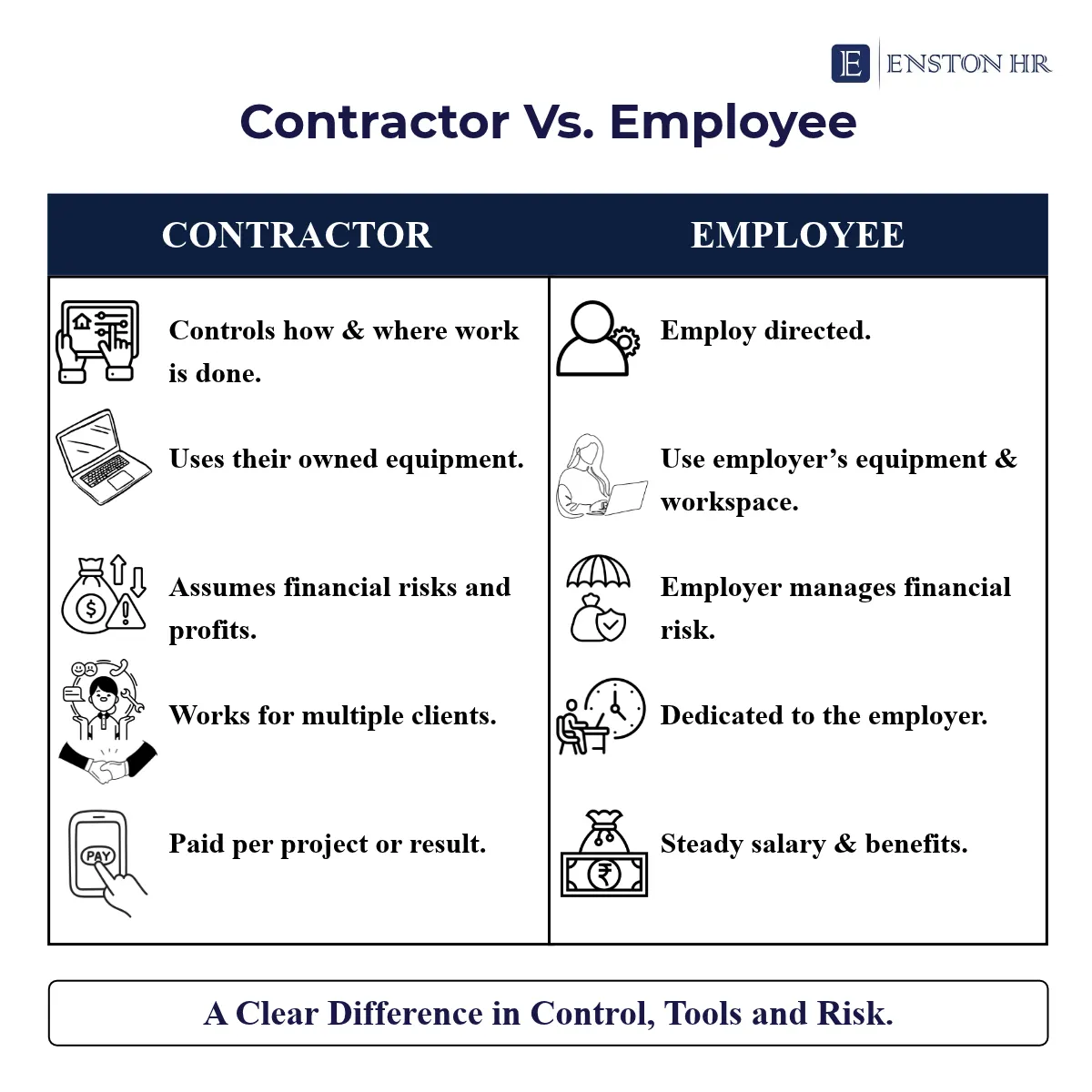
Calling someone a contractor does not make them one.
It looks like the cheap option. No CPF. No leave. No employment records. Invoice in, payment out.
Then the arrangement gets examined, and the label does not survive.
Who controls the work
Fixed hours. A desk. A reporting line. Tasks handed out day to day.
That is employment, whatever the invoice says.
Whose tools, and whose risk
A contractor brings their own equipment and can lose money on a job.
Someone working on your systems for a fixed monthly amount carries none of that risk.
Whether anyone else hires them
One client, full time, for two years, is an employee who happens to invoice.
What it costs when the label fails
If the relationship is reclassified, the CPF is backdated. And it is the employer CPF Board comes to, for both shares.
What to do about it
Take the people you pay by invoice each month and run those three questions over each one. Who sets the hours. Who carries the risk. Who else they work for.
Where the answers point to employment, move them onto the payroll from here. What that costs you is known in advance. What a reclassification costs is not.
Enston HR handles payroll and work passes for small companies in Singapore. We’ll be writing about what we see.